
Schedule online
CALL US NOW
817-900-8324
CALL US NOW
817-900-8324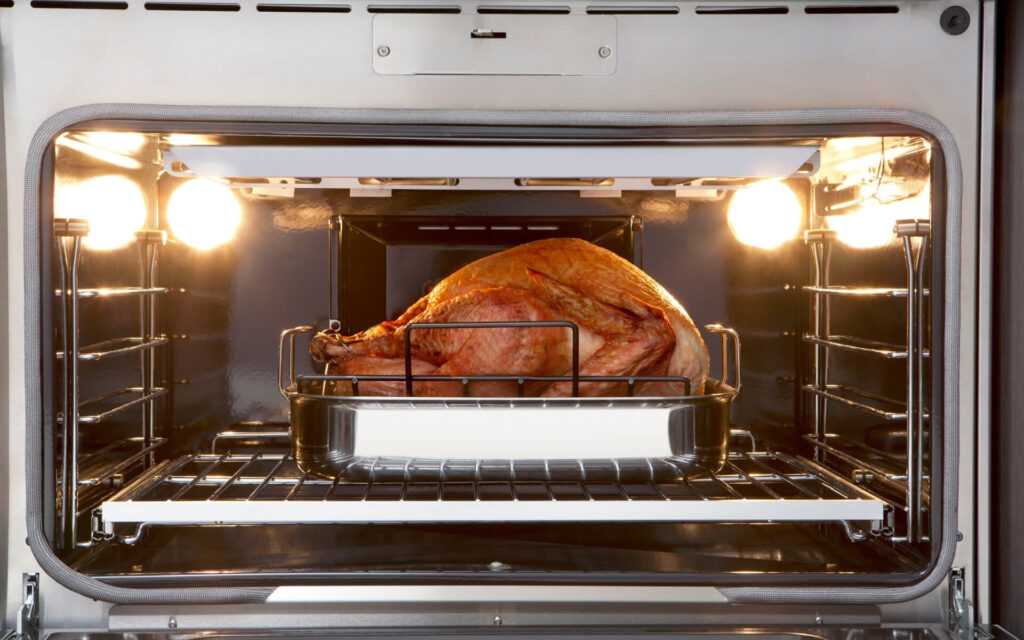
I work as an appliance technician, and I open up ovens after roasting season all the time. The story inside is almost always the same. There is a glaze of baked-on grease across the floor and back wall, and a dark, sticky ring of burnt drippings right where the roasting pan sat.
Most of the time, the oven is not broken. It is just dirty. A little attention after each roast can save you from smoke, bad smells and an unnecessary oven repair call.
One of the worst ovens I have ever seen belonged to a family that had roasted turkeys and prime rib for a few holiday seasons. The bottom was coated in carbonized fat that looked like black tar. It had dripped onto the bake element, and the oven smoked every time it was turned on.
The homeowners were sure the heating element had gone bad. They were ready to buy a new range.
Nothing was wrong with the appliance. A small spill had been ignored “just this once,” and then the next roast went in on top of it. Layer after layer of fat baked on until it looked like a failure. The fix was simple and much easier on their budget than a new range.
A clean oven and the right setup make a big difference. Here is what I recommend before the roast goes in:
Tenting the meat with foil is a good habit. Lining the bottom of the oven with foil is a different story, and I explain why below.
Many popular shortcuts create more problems than they solve. These are the ones I see most often in my work.
This is the habit I would change first. It looks like a smart shortcut, but it can trap heat, melt onto the porcelain, and damage a hidden bake element. It can also block airflow. I have replaced more than a few elements and seen more than a few finishes ruined this way.
Loose liners can warp, and they can cause fires if they touch the element. I do not recommend them.
Thin pans bend under the weight of a heavy roast and can spill hot grease across the inside of the oven.
A heavy coat of spray builds into a sticky film that is very hard to remove.
Cleaning up right after the roast is the best way to prevent a stubborn mess. This is the routine I give my customers:
Do this every time, and you will rarely face a smoky, stubborn mess.
I am not against self-clean, but I treat it as a last resort, not a routine. The cycle runs the oven at roughly 800 to 900 degrees for a few hours. That kind of heat is hard on the control board, the door lock and the thermal fuse.
I have been called out for dead displays, locked doors that would not release, and breakers that tripped right after a cycle. The most common complaint is smoke alarms going off, because a heavily soiled oven turns all that grease into smoke.
Some people, and even some technicians, swear by self-clean. I would still rather you hand-clean, and the dirtier the oven, the more I would steer you that way. It is easier on the oven and usually easier on your wallet.
A week before Thanksgiving, a woman phoned me nearly in tears. Her oven had started smoking, then tripped the breaker halfway through a cycle. For years she had lined the bottom with foil and run self-clean right before every holiday.
When I pulled the range out, the foil had fused to the floor and the bake element had burned through. The control board was damaged too, so the bill was much higher than she expected.
I did not want to lecture her, so I told her what I had seen and showed her what to do differently. I recommended a roasting pan with a rack, a sheet pan on the lower rack, a quick wipe after the oven cooled, and self-clean only when she really needed it.
When I checked in the next spring, her oven was spotless and she had not needed another repair.
What I took away from that call is that most people are not careless. They have just picked up a tip that sounded smart. Gentle, honest advice without pressure goes a lot further than scolding, and it saves people real money.
Some signs mean it is time to stop guessing and call a professional:
If you need oven repair in Arlington, TX, a quick call to a technician is better than guessing and hoping. An honest diagnosis can also tell you whether you need a repair or just a good cleaning.
A little care after each roast saves you from a big mess and a bigger repair bill. A few minutes of prevention is far easier than scrubbing burnt-on grease later. Use the right pan, catch the drips, wipe up spills while they are soft, and save self-clean for when you truly need it.
Call Us Now 817-900-8324
