
Schedule online
CALL US NOW
817-900-8324
CALL US NOW
817-900-8324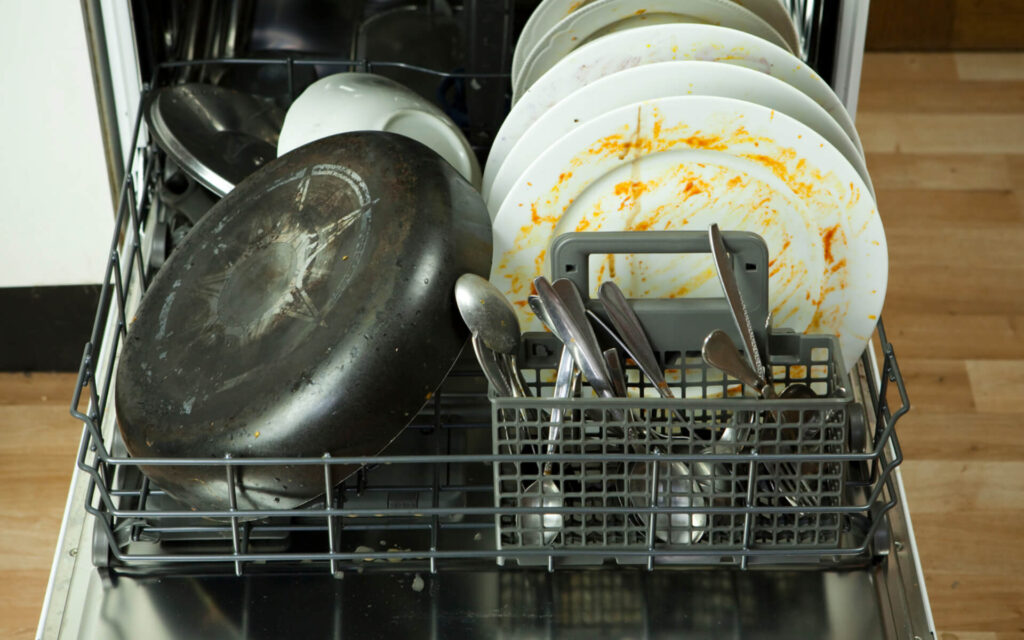
I’m an appliance technician serving Arlington, TX. When someone calls me about dishes that come out gritty, cloudy, or still dirty, I almost never start with the pump or the control board. I start with the cheapest fix, the one that takes about two minutes. I would rather save you a service fee than sell you a dishwasher repair you don’t need.
Here is the exact order I work in. You can follow it at home before you pick up the phone.
A clogged filter is by far the most common cause I find. It fills up with food scraps and grease, and most people have no idea they’re supposed to clean it. Twist it out, rinse it, and wipe away any grease or grit you find.
If you do this once a month, you’ll prevent more bad wash cycles than with anything else I could tell you. That one habit solves more calls than any other fix I do.
Next, pull out the lower rack and spin the spray arms by hand. They should turn without resistance. Look for these problems:
If the arms can’t spin, the water can’t reach your dishes, no matter how good the machine is.
If you see dirty water sitting in the bottom of the tub, the problem is the drain. A clogged drain hose is one possible cause. The other is one that almost nobody thinks of, and I see it all the time.
When a new garbage disposal is installed, there’s a small plug inside the dishwasher inlet that has to be knocked out. If it’s left in place, the dishwasher can’t drain properly. The plug quietly blocks the drain and leaves a murky, gritty film on everything. This can go unnoticed for years.
I once got a call from a customer with a seven-year-old Bosch dishwasher. She was sure it was dying. Her dishes had a gritty film, her glasses looked cloudy, and she had already started shopping for a new machine. She had cleaned the filter and the spray arms, and the water was hot enough, so I almost went straight to the pump.
Instead, I checked the drain hose connection under the sink. Her garbage disposal had been replaced a couple of years earlier, and the knockout plug was still sitting inside the inlet. Dirty water had been backing up into the tub every single cycle.
I popped it out with a screwdriver and a pair of pliers, then ran a test cycle. The water drained clean. She laughed and said, “That’s it?” Then she went quiet and thanked me for not selling her a new dishwasher. She has since referred two of her neighbors to me. That job is a big reason I always check the simple things first.
Only after I’ve checked the filter, spray arms, and drain do I look at water temperature and detergent.
This is the habit I wish I could stop. People scrub every plate under the tap because they think it helps. Modern detergents contain enzymes that need some food soil to grab onto. When dishes go in spotless, the detergent has nothing to work on and can leave a film behind. A quick scrape is all you need.
Loading mistakes cause a lot of dirty loads. Common ones include:
The advice I disagree with most is “just run it twice.” It usually hides a clogged filter or a drain problem that will keep getting worse. I would much rather you spend two minutes cleaning the filter once a month than keep running extra cycles and end up needing a repair call down the road.
If you’ve worked through everything above and the dishes are still dirty, you may have a real part failure. Here is what I look for.
A weak or failing pump usually gives itself away with a humming or grinding noise, gritty dishes, water that barely sprays, or water left sitting in the bottom of the tub.
An inlet valve problem shows up as too little water in the tub, or as a machine that fills slowly or not at all.
A control board tends to act strangely. Cycles stop halfway, buttons don’t respond, or the same error code keeps coming back.
My rule of thumb is simple. If your dishwasher is under about eight years old and the problem is one clear part, dishwasher repair is usually the right call. If the machine is ten to twelve years old and has more than one problem, or the repair would cost a big chunk of what a comparable new machine would, I’ll tell you honestly that replacing it makes more sense.
I would never push a new unit when a clogged filter or a drain fix will do the job.
If you do need a new machine, I steer people toward well-known mid-range models with a stainless steel tub, a self-cleaning filter, and parts that are easy to find. I’m cautious about the cheapest bargain-bin machines, because they’re hard to repair and often don’t last.
Before you call anyone, check three things. Look at the filter, make sure the spray arms aren’t blocked, and confirm the drain isn’t backed up. If you’ve done all of that and the problem is still there, that’s when it’s worth a call.
If you’re in Arlington, TX or the surrounding area and need help with dishwasher repair, I’m happy to talk it through with you first. If it’s a simple fix you can do yourself, I’ll tell you so over the phone before anyone drives out. I won’t pressure you into anything, because I would rather earn your trust than make a quick sale.
Call Us Now 817-900-8324
