
Schedule online
CALL US NOW
817-900-8324
CALL US NOW
817-900-8324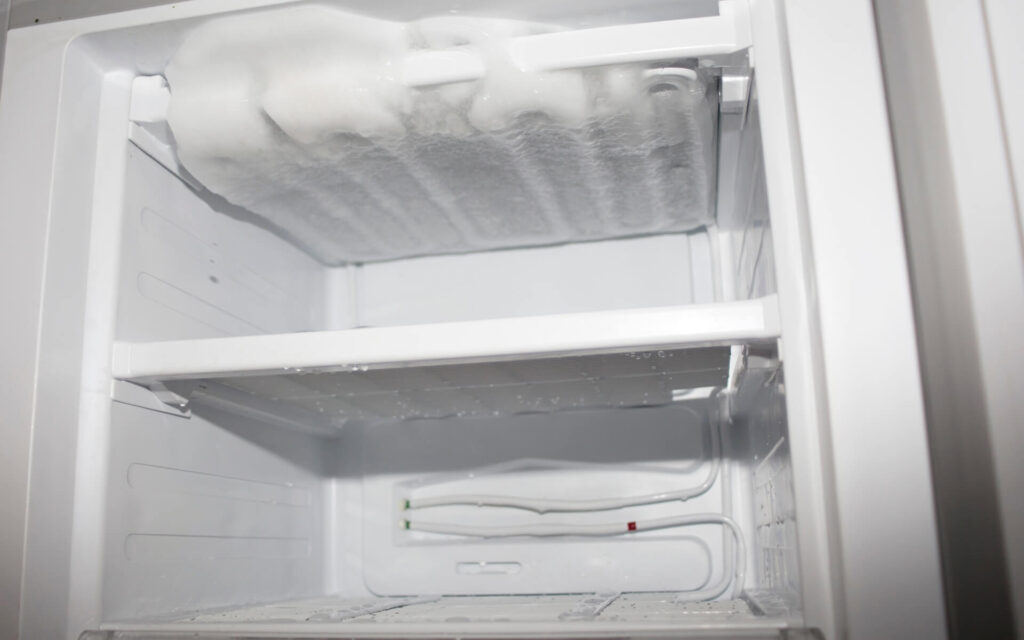
If you’re standing in your kitchen looking at a freezer that has turned into a block of ice, you want to know how to fix it fast. The quick answer is to unplug the fridge, empty it, open the doors, and let warm air do the work, with a few safe tricks to speed things up. But after years of refrigerator repair work in Arlington, Texas, and the surrounding area, I can tell you the fastest way to defrost a fridge is only half of the story. The other half is figuring out why it iced up in the first place.
When homeowners call us, the story is almost always the same. The freezer is packed with ice, the fridge side is warm, and they have a theory. Most people blame a bad door seal, a door left open too long, a humid Texas summer, or an overstuffed freezer.
Those things can add a little frost, and I won’t pretend they never matter. But when we pull off the back panel, the real cause is usually somewhere else.
Your fridge is designed to warm up its evaporator coils on a regular schedule so frost never builds up. Three parts run that process:
When one of these parts quietly fails, the coils never get their warm-up cycle. Frost builds layer on layer until it blocks the airflow. The fridge can no longer move cold air where it needs to go, the fridge side warms up, and food starts to spoil. That is why a freezer full of ice and a warm refrigerator so often show up together.
Here is the method I give customers over the phone. With this approach, a heavily iced freezer will usually clear in a couple of hours instead of taking most of an afternoon.
Patience is your best tool here. The gentlest method is also the safest one.
I’m not here to scold anyone, but I’ve seen these mistakes often enough that they’re worth a warning.
A knife, ice pick, or screwdriver is the most common way people damage a fridge. One slip can puncture the evaporator coil. That turns a fixable ice problem into a refrigerant leak, and at that point the fridge is often finished.
Heat guns, high-powered hair dryers held too close, and kettles of boiling water poured straight in can warp the plastic liner and melt wiring or sensors.
I once got a call from a man who had used a heat gun on a frozen freezer. The inner liner had bubbled and warped, and the hot air had scorched a wire harness near the coil. The insulation on those wires was brittle and burned. Luckily, nothing caught fire, but it was close. We had him switch off the breaker right away. In the end, the repair cost more than the original problem would have.
Meltwater soaks into flooring and creates a slipping hazard. Keep towels down and a pan underneath, and mop up as you go.
Plenty of people defrost the fridge, load the food back in, and never ask why it iced up. A few weeks later, it’s a solid block again.
I’ll gently push back on the question itself. When your fridge is iced over, the food is the thing on the clock, not the ice.
A closed refrigerator keeps food cold for only about four hours after the power goes off. A full freezer holds its temperature for roughly two days, or about one day if it’s half empty. Any perishable food that has sat above 40°F for more than two hours should go in the trash, even when it hurts to throw it out.
So the better question is how quickly you can get your food somewhere cold and then give the appliance the time it needs to thaw properly. Rushing the thaw is how people end up with damaged parts. Protecting the food first is how you avoid getting sick.
If a failed defrost heater, thermostat, or control board caused the ice, thawing the fridge won’t solve the problem. It will clear for a while, and then the ice will be back in a few weeks. No trick, hack, or gadget can change that, because the part that is supposed to prevent the ice is no longer working.
If your fridge keeps icing up, that is the signal to call a professional for refrigerator repair instead of defrosting it again and again. A technician can test the heater, the sensor, and the board, clear the drain line, and watch a full defrost cycle to make sure the fridge is truly fixed.
One of my favorite jobs was for a retired schoolteacher in Hurst who called me in tears. Her eleven-year-old side-by-side was dripping water on the kitchen floor. The freezer was packed with ice, and the fridge side had crept into the mid-fifties. She had already been quoted over a thousand dollars for a replacement and assumed the door seal had failed.
Behind the freezer panel, the coil was buried in frost. The real culprit was a burned-out defrost heater, a part that costs less than a nice dinner out. I thawed the coil, replaced the heater and the defrost thermostat, and cleared the drain line. Then I stayed and watched the fridge run a full defrost cycle and start cooling again.
When I told her it had plenty of years left, she laughed and wiped her eyes. Her late husband had bought that fridge, and she wasn’t ready to say goodbye. She sent me home with a container of homemade pecan bars, and she has since referred two neighbors. That job is exactly why I believe in getting the diagnosis before the sales pitch.
Whether you live in Arlington or elsewhere in Texas, here is the honest guidance I give homeowners.
As a rule of thumb, repair usually makes sense when two things are true:
That covers most of what we see with ice problems, including a defrost heater, a sensor, a fan motor, a bad control board, or a worn door gasket. These are modest fixes that can give you years of extra life, and new refrigerators cost a lot more than they used to.
I’ll tell you to move on when the sealed system has failed, meaning a bad compressor or a refrigerant leak, because that repair is expensive and rarely pays off. The same goes for a fridge that is well past its prime with a string of repairs behind it, or one so inefficient that it is quietly padding your electric bill.
Most people in this business are decent, but the incentives can tilt toward “you might as well replace it,” especially when someone is selling the new one. A good technician lays out the real numbers, including the repair cost, the age of the appliance, and what is likely to fail next, and then lets you decide without pressure. I would rather lose a repair sale and keep your trust than talk you into a repair that won’t last. And if the honest answer is that it’s time for a new one, I’ll say so kindly.
If your fridge keeps icing up, your freezer is a block of ice, or your food isn’t staying cold, Appliance Recovery can help homeowners in Arlington, Texas, and nearby cities. We’ll find the real cause and give you honest advice with no pressure. Call or book online to have your refrigerator checked before a small defrost problem turns into a big expense.
Call Us Now 817-900-8324
